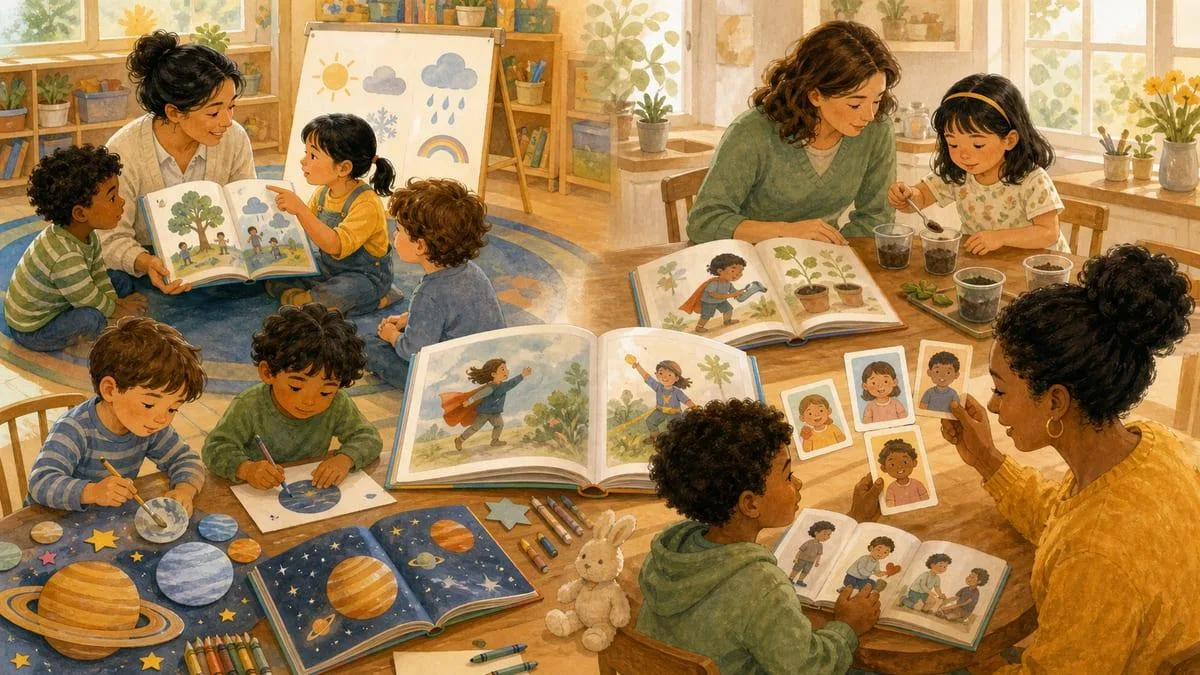
Bedtime gets most of the credit.
And yes, bedtime books are wonderful. They soften the room. They slow the body. They give the day a gentle ending.
But picture books can do far more than help children fall asleep.
They can begin science lessons. They can help children name feelings. They can prepare a child for a new experience. They can support body safety conversations. They can give teachers a shared reference point. They can turn a hard topic into something speakable.
A picture book is not only a story.
It is a tool for connection.
Use picture books to launch a conversation
Sometimes children answer direct questions with one word.
"How was school?"
"Fine."
"Are you worried?"
"No."
"Did something happen?"
"I don't know."
A story can open a side door.
When children talk about a character, they often reveal what they understand, fear, hope, or wonder without feeling exposed.
Try:
"Have you ever felt like this character?"
"What would you tell them?"
"Why do you think they did that?"
"What helped them?"
"Who could they talk to?"
This works at home and in classrooms because the child is not the subject at first. The story is.
Use books for emotional check-ins
Social-emotional learning does not have to begin with a worksheet.
It can begin with a page.
NAEYC has encouraged teachers to use children's books to help young children identify feelings and talk about social situations. Research on shared reading and emotion talk also suggests that picture books can create useful moments for discussing emotions, motives, and perspectives.
At home, you can create a simple feelings routine:
Read a book with an emotional moment.
Ask, "What is the character feeling?"
Ask, "Where do you feel that in your body?"
Ask, "What helped?"
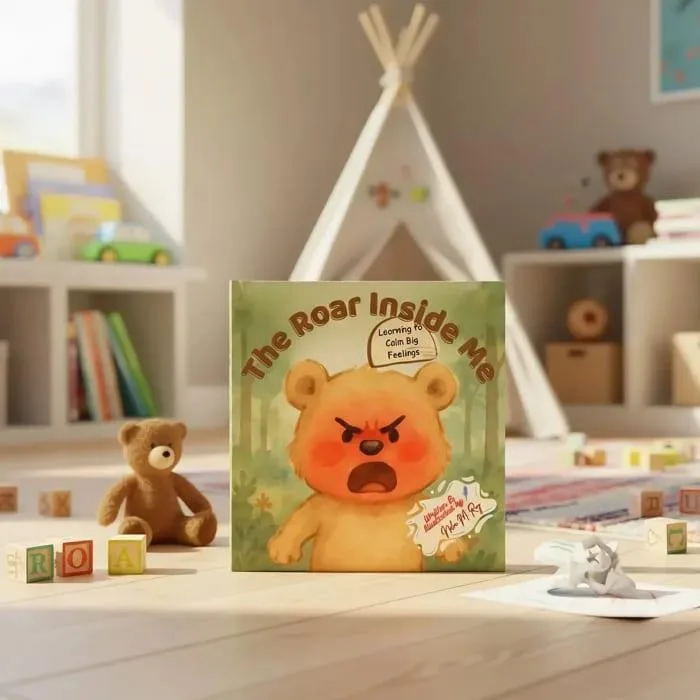
For a book like The Roar Inside Me, that might lead to a conversation about anger.
For Buzzy the Brave Bee, it might become a conversation about trying something scary.
For Rest Easy, it might become a way to notice what helps the body calm down.
Use books for STEM activities
STEM picture books are natural launchpads.
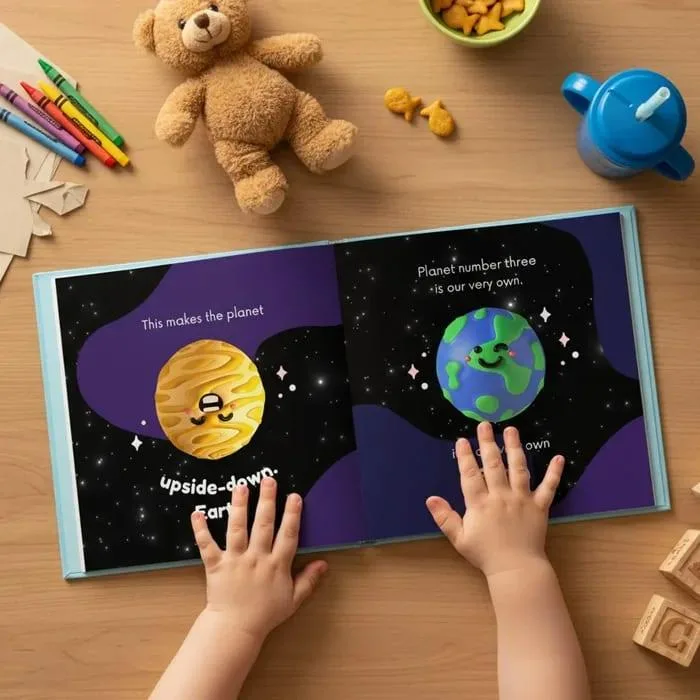
Read Pluto's Guide to the Planets, then draw the planets in order.
Read Hi, I Am H2O!, then observe ice melting.
Read Blooming with Daisy, then plant sunflower seeds.
Read The Magical World of Weather, then track the sky for a week.
Read Buzz, Waggle, Build!, then watch flowers and look for pollinators.
NSTA's Picture-Perfect Science approach is built around using children's books to guide inquiry. That is the key word: inquiry.
The activity should not only prove a fact. It should invite children to ask:
"What do I notice?"
"What changed?"
"Why might that happen?"
"What should we try next?"
Science begins when children realize their questions are welcome.
Use books before new experiences
Children often cope better when they can preview a new situation.
A book can help before:
- starting school
- going to the doctor
- welcoming a sibling
- moving homes
- attending a book fair
- trying a sport
- camping for the first time
- visiting the dentist
- sleeping alone
- joining a group activity
The book gives the child a script for what might happen. It also gives adults a way to ask, "Which part are you excited about? Which part feels tricky?"
For example, All the Sports I Can Play can help a child explore sports before choosing one. Little Campers, Big Adventures can make outdoor experiences feel exciting and familiar. A bravery book can help before any first.
Use books for body safety
Body safety conversations should not wait for a crisis.
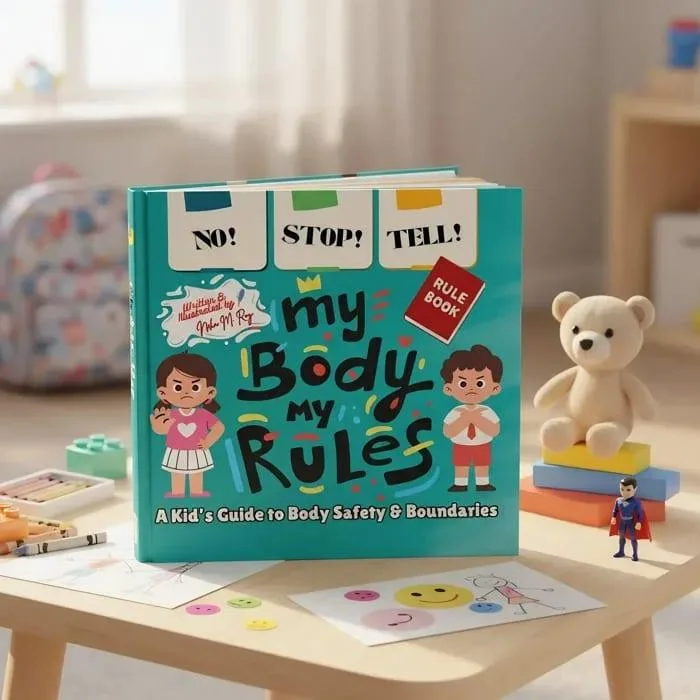
A book like NO! STOP! TELL! My Body, My Rules! can be used at home, in counseling spaces, or carefully within age-appropriate educational settings to teach personal boundaries, trusted adults, and speaking up.
Organizations like NSPCC and RAINN emphasize regular, age-appropriate conversations about body boundaries. A picture book can help adults keep the tone calm.
After reading, ask:
"Who are your trusted adults?"
"What can you say if you do not want a hug?"
"What kinds of secrets should we never keep?"
"Can you tell me anything, even if it feels embarrassing?"
These are not one-time questions. They are part of a safety culture.
Use books for creative response
Not every book activity needs to be academic.
Children can:
- draw a new cover
- act out a scene
- make a puppet
- create a different ending
- build a setting with blocks
- write a letter to a character
- invent a sequel
- make a feelings chart
- create a science journal
- design a bookmark
Creative response helps children move from receiving a story to owning it.
That matters because children often process through play before they process through explanation.
Use books for family rituals outside bedtime
Try reading:
At breakfast: one poem, one page, one joke book.
After school: a decompression book before questions.
In the car: an audiobook or parent-read page before an appointment.
On Sundays: a family library basket reset.
Before a holiday: a themed book.
Before a difficult conversation: a book that opens the topic.
A reading ritual does not have to live only at night.
Some children are too tired at bedtime to truly engage. Morning or afternoon reading may work better.
The best ritual is the one your family can actually keep.
Use books to connect home and school
Teachers can send home a simple prompt connected to a classroom read-aloud:
"Ask your child which character showed courage today."
Parents can tell teachers:
"We read a book about bees and now my child is asking about pollination."
School librarians can create displays by need:
Books for big feelings.
Books for curious scientists.
Books for new readers.
Books for body safety.
Books for family celebrations.
Books for trying something new.
When home and school share books, children get repeated language across settings.
That repetition helps.
A ChatterChirps beyond-bedtime menu
For STEM inquiry: Pluto's Guide to the Planets, Hi, I Am H2O!, The Magical World of Weather, Blooming with Daisy, Buzz, Waggle, Build!
For emotional learning: The Roar Inside Me, Buzzy the Brave Bee, Rest Easy, Lila and the Lost Kite
For movement and confidence: All the Sports I Can Play
For family celebrations: She Is So Much More, How Dads Show Up
For body safety: NO! STOP! TELL! My Body, My Rules!
For imagination and outdoor play: Little Campers, Big Adventures, Welcome to Camp Can-Be
The same book can serve different purposes depending on the child, the adult, and the moment.
Final thought
Picture books are small, but they are not simple.
They can hold science, safety, humour, grief, courage, identity, family, weather, bedtime, friendship, and wonder inside thirty-two pages.
So yes, read them at bedtime.
But also read them at the kitchen table. In classrooms. On rainy afternoons. Before hard conversations. After big feelings. At the start of a lesson. In the middle of an ordinary day when a child needs a doorway.
A picture book can be that doorway.
Helpful sources:
NSTA Picture-Perfect Science: https://www.nsta.org/book-series/picture-perfect-science
NAEYC, promoting young children's social and emotional health: https://www.naeyc.org/resources/pubs/yc/mar2018/promoting-social-and-emotional-health
Dialogic Reading research overview: https://pmc.ncbi.nlm.nih.gov/articles/PMC4422048/
NSPCC Talk PANTS: https://www.nspcc.org.uk/preventing-abuse/keeping-children-safe/underwear-rule/