
A book launch can make a calm person behave strangely.
You check rankings. You refresh reviews. You wonder if you posted too much or not enough. You message people and then immediately regret messaging people. You watch other authors get dozens of comments and wonder what you missed.
If you are launching an indie children's book, the pressure is real because everything feels personal.
You did not just upload a product.
You released a story that may have lived in your heart for years.
So let us make the launch more human.
First, define what the launch is for
Not every launch has the same goal.
Before you make a plan, choose your primary aim:
- get early reviews
- reach parents in a specific niche
- sell copies quickly
- build your email list
- book school or library visits
- introduce a series
- support a seasonal moment
- gather testimonials
- create long-term discoverability
If you try to do all of these at once, you will exhaust yourself.
For most indie children's authors, the strongest first launch goal is not instant bestseller status. It is proof of life: real readers, real reviews, real feedback, and a clearer path to the next audience.
Start before launch day
Launch day is too late to build trust.
Begin 6-8 weeks before if possible.
Week 1-2: clarify positioning
Write one sentence that explains who the book helps and why.
Example:
"A gentle body safety picture book for ages 3-8 that helps children learn boundaries, trusted adults, and speaking up."
Week 2-3: prepare your book page
Your website should include cover, age range, themes, formats, buy links, author note, reviews if available, and educator/parent use cases.
Week 3-4: invite early readers
Ask people who genuinely match the book: parents, teachers, librarians, therapists, homeschoolers, book reviewers, or niche creators.
Week 4-5: share behind the scenes
Talk about why you wrote the book, who it is for, what problem it helps solve, and what children may take from it.
Week 5-6: collect early responses
Ask ARC readers for honest feedback and, when appropriate, honest public reviews after release.
Launch week: make it easy
Give people direct links, clear asks, shareable graphics, and specific ways to help.
Post-launch: keep going
A children's book does not expire after launch week. Many books find readers slowly through seasons, schools, libraries, blogs, and word of mouth.
Build a launch team without making it weird
A launch team should not be a pressure group.
It should be a small circle of people who understand the book and want to help it reach the right readers.
Give them options:
- read an advance copy
- share a post
- request the book at a library
- recommend it to a teacher
- leave an honest review
- post a photo
- invite you to speak
- introduce you to a bookstore or parent group
Make it clear that reviews must be honest. Amazon, Goodreads, and FTC rules matter. Do not ask for five stars. Do not ask people to hide that they received a free copy. Do not ask friends and family to flood a retailer with unnatural reviews.
Trust is more important than a spike.
Create content around reader problems
Do not only post the cover.
Post the reason someone might need the book.
For a bedtime book:
"What to do when bedtime feels like a battle."
For a STEM book:
"How to answer a child's planet questions when you are not a science teacher."
For a body safety book:
"How to talk about private parts without making children feel ashamed."
For a sports book:
"How to help a child try activities even when they are nervous."
For a Father's Day book:
"A gift for the dad who shows up in ordinary ways."
Your book is the bridge. The reader's real-life moment is the doorway.
Give people one clear ask at a time
Launches fail when every post asks for everything.
Buy my book.
Review my book.
Share my post.
Join my newsletter.
Comment below.
Tag a friend.
Request at library.
Follow me.
That is too much.
Use one ask per message.
Monday: "If you know a parent looking for a gentle body safety book, please share this."
Tuesday: "Launch day is here. Here is the book link."
Wednesday: "If you have read it, an honest review would help other families find it."
Thursday: "Teachers, here are three ways to use this book in class."
Friday: "Here is a free printable to go with the book."
Clarity helps people help you.
Do not confuse launch week with the book's future
This is important.
If launch week is quiet, the book is not dead.
Children's books often have long tails because they connect to repeatable needs: holidays, school units, bedtime routines, safety conversations, science topics, library displays, and gift seasons.
A book about dads can return every Father's Day.
A plant book can return every spring.
A body safety book can matter all year.
A space book can connect to science week.
A bedtime book can find families whenever sleep gets hard.
Plan for seasons, not just launch day.
Protect your energy
Set boundaries around checking numbers.
Check once in the morning and once at night if you must. Do not refresh your way into misery.
Prepare posts before launch week.
Use templates.
Ask for help.
Sleep.
Eat actual food.
Remember that your child, family, and real life are not interruptions to your author career. They are often the reason the book exists.
A simple launch checklist
Before launch:
- final book links
- universal link if selling internationally
- website page
- email list signup
- ARC reader list
- review request language
- social media posts
- launch graphics
- author bio
- book description
- teacher/parent talking points
- free printable or activity
- follow-up emails
After launch:
- thank readers
- save testimonials
- update website with reviews
- pitch schools/libraries/bookstores
- write blog posts around the book theme
- reuse content in new formats
- track what worked
What this looks like for ChatterChirps
For ChatterChirps, I would not launch every book the same way.
NO! STOP! TELL! My Body, My Rules! needs a trust-first launch: parent education, body safety resources, school counselor language, and gentle reminders that the book is empowering rather than frightening.
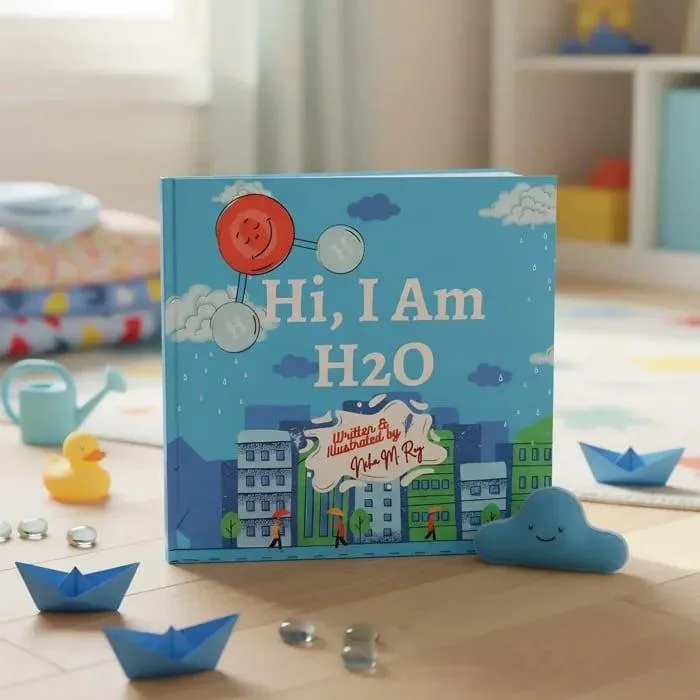
Pluto's Guide to the Planets, Hi, I Am H2O!, Blooming with Daisy, The Magical World of Weather, and Buzz, Waggle, Build! need curiosity-first launches: science questions, simple home activities, classroom tie-ins, and read-aloud clips that make STEM feel alive.
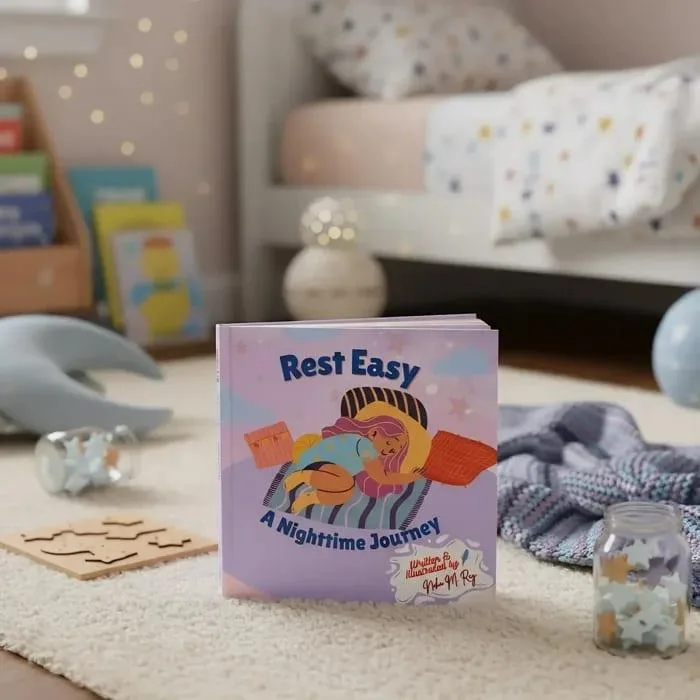
Rest Easy: A Nighttime Journey needs a routine-first launch: bedtime struggles, winding-down rituals, mindful breathing, and the emotional relief parents feel when evenings become softer.
She Is So Much More and How Dads Show Up need gift-first launches: Mother's Day, Father's Day, birthdays, baby showers, and the kind of family love children can return to again and again.
All the Sports I Can Play needs a movement-first launch: trying new activities, confidence, teamwork, and children seeing sports as something open to them.
That is the point: the book is not the campaign. The reader's real-life need is the campaign.
Final thought
A launch is not a judgment day.
It is an opening.
The goal is to help the first right readers find the book, then learn from what happens next.
Be organized. Be ethical. Be specific. Be patient.
And remember: a children's book does not need to go viral to matter.
It needs to reach the child who needed it.
Helpful sources:
Amazon KDP Customer Reviews: https://kdp.amazon.com/help/topic/G202101910
FTC Endorsements and Reviews: https://www.ftc.gov/business-guidance/advertising-marketing/endorsements-influencers-reviews
Goodreads Review Guidelines: https://www.goodreads.com/review/guidelines
Written Word Media 2025 Indie Author Survey: https://www.writtenwordmedia.com/2025-indie-author-survey-results-insights-into-self-publishing-for-authors/