Many indie children's authors dream of seeing their books in schools, libraries, and bookstores.
Then they try to reach out and suddenly feel awkward.
What do I say?
Who do I email?
Do I mention Amazon?
Do I donate a copy?
Do I ask for an event?
What if they ignore me?
What if I sound pushy?
The fear is understandable. Schools, libraries, and bookstores are not just sales channels. They are communities with real constraints, limited time, and specific needs.
If you want to reach them, the answer is not to shout louder.
It is to make your book easy to understand, easy to evaluate, and easy to use.
Start with fit
Do not pitch everyone the same way.
A bookstore cares about customers, local interest, events, sales terms, and whether the book fits their shelves.
A school cares about students, curriculum, age range, assemblies, classroom use, parent value, and logistics.
A library cares about community need, collection policy, reviews, availability, cataloguing, durability, and patron demand.
Your job is to show fit.
Not "Please support me."
More like:
"This book may help your families talk about body safety in a gentle, age-appropriate way."
Or:
"This STEM picture book supports early elementary curiosity about planets and could pair with a space unit."
Or:
"I am a local children's author available for a read-aloud and activity for ages 4-7."
Prepare your author materials
Before outreach, create a simple media kit or webpage with:
- book cover
- title and subtitle
- age range
- page count
- formats
- ISBNs
- retail and wholesale info if available
- distributor availability
- short description
- themes
- author bio
- professional photo
- reviews or testimonials
- awards
- event options
- contact email
- downloadable activity sheet if relevant
This signals professionalism.
It also reduces back-and-forth.
For bookstores: think like a bookseller
Independent bookstores are often approached by many authors. Respect their process.
Check their website first. Many stores have local author or consignment guidelines. Follow them exactly.
If you email, keep it short:
Subject: Local children's author inquiry — body safety picture book for ages 3-8
Hello [Name],
I'm Neha Moghe Roy, founder of ChatterChirps and author of NO! STOP! TELL! My Body, My Rules!, a Golden Wizard Book Prize-winning body safety picture book for ages 3-8.
I wondered if this might be a fit for your children's section, parent resources, or a future storytime around personal boundaries and trusted adults. Here is the book page with ISBNs, formats, and details: [link]
Thank you for considering it,
Neha
That is enough.
Do not attach giant files unless requested. Do not follow up aggressively. Do not make the store explain the entire book business to you.
For schools: offer value beyond the book
Schools are not usually looking for an author to sell books first. They are looking for value for students.
Your pitch should answer:
What age group?
How long is the session?
What will students learn or experience?
Does it connect to curriculum, literacy, SEL, science, safety, creativity, or writing?
What do you need from the school?
Is there a fee?
Can books be ordered?
A strong school visit offer might be:
"A 30-minute interactive read-aloud and activity for K-2 students about courage, asking questions, and how stories are made."
Or:
"A body safety story session for ages 4-8 focused on boundaries, trusted adults, and speaking up, designed to be gentle and non-scary."
ALA notes that author visits can connect children and families with books and reading. Bookstores that coordinate school author visits often describe events that include a talk, reading, Q&A, and signing. That structure works because it gives children multiple ways to engage.
For libraries: understand collection realities
Libraries are not personal bookshelves. They have policies.
Some require professional reviews. Some prefer books available through specific vendors. Some have local author programs. Some accept donations but do not guarantee circulation. Some will consider patron requests more seriously than author pitches.
This can feel discouraging, but it is not personal.
For libraries, make your pitch especially clear:
- Is the book professionally produced?
- Does it have an ISBN?
- Is it available through a purchasing channel they use?
- Does it fill a community need?
- Are there reviews, awards, or local relevance?
- Is there a program you can offer that serves patrons?
If a parent or teacher requests the book, that may help. Patron demand matters.
Lead with the reader's need
This is the shift that changes everything.
Weak pitch:
"I wrote a children's book and would love your support."
Stronger pitch:
"I wrote a gentle picture book that helps children ages 3-8 learn body boundaries, trusted adults, and how to speak up. It may be useful for families, counselors, and early elementary classrooms."
Weak pitch:
"Please carry my book."
Stronger pitch:
"This book fits families looking for STEM read-alouds about space, especially children who enjoy facts told through character and rhyme."
People are more likely to help when they understand who the book helps.
A ChatterChirps example
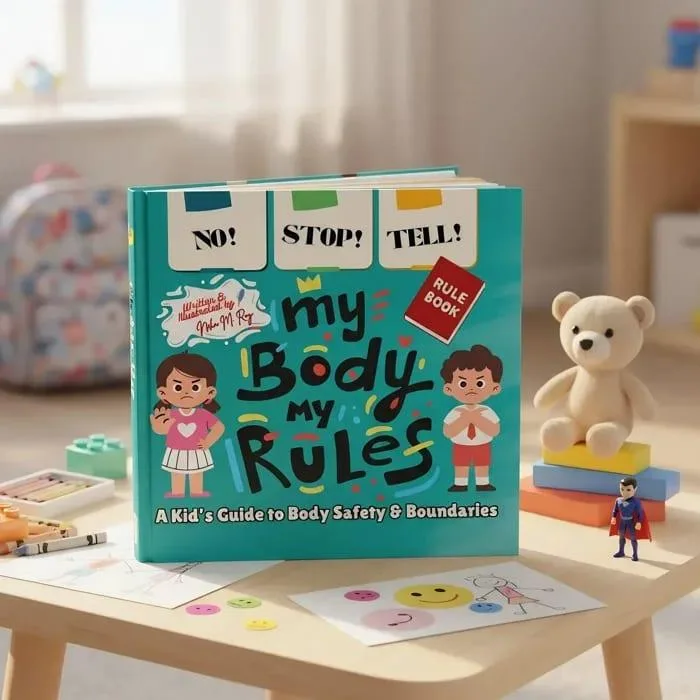
If I were pitching ChatterChirps books, I would not send one generic message for the whole catalogue.
For a school counselor or parent educator, I would lead with NO! STOP! TELL! My Body, My Rules! because it supports body safety, consent, personal boundaries, and trusted-adult conversations for young children.
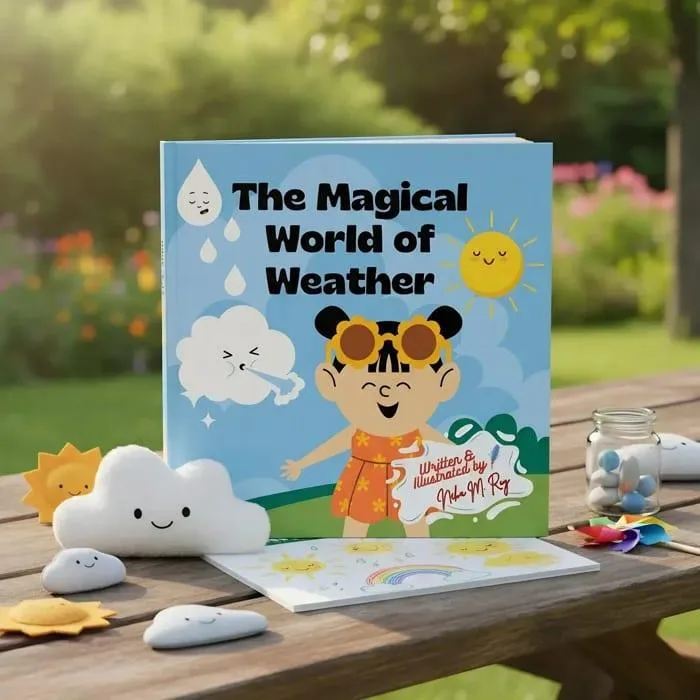
For a STEM night, science teacher, homeschool group, or library display, I would group Pluto's Guide to the Planets, Hi, I Am H2O!, The Magical World of Weather, Blooming with Daisy, and Buzz, Waggle, Build! as early science read-alouds that turn big concepts into story.
For a family event or seasonal gift table, I would lead with She Is So Much More and How Dads Show Up because they speak to Mother's Day, Father's Day, family appreciation, and everyday love.
For a PE teacher, community sports event, or movement-themed classroom week, I would pitch All the Sports I Can Play as a way to introduce children to different activities and the confidence to try.
For bedtime, mindfulness, or big-feelings displays, I would include Rest Easy, The Roar Inside Me, and Buzzy the Brave Bee.
The same author can have many books, but each outreach email should feel like it was written for one clear need.
Build relationships before you need them
Visit local bookstores.
Attend library events.
Follow school librarians.
Share other authors' events.
Buy books from indie stores when you can.
Comment thoughtfully.
Ask what kinds of books their community needs.
Relationships are not hacks. They are the long way that actually works.
Do not be discouraged by no
You will be ignored.
You will be told no.
You will find forms that seem impossible.
You will discover that some places do not carry self-published books.
You will make mistakes.
That does not mean you should stop.
It means you should refine.
Make your materials better. Make your pitch shorter. Get reviews. Improve distribution. Build local demand. Offer a clearer event. Try smaller venues. Ask parents to request the book. Connect with teachers directly.
Final thought
Schools, libraries, and bookstores are not gates to storm.
They are relationships to earn.
When you approach them with clarity, respect, and a real understanding of their readers, you stop sounding pushy.
You start sounding useful.
And useful is what gets remembered.
Helpful sources:
ALA Author Visits: https://www.ala.org/tools/atoz/authorvisits/authorvisits
SCBWI school visit programming: https://www.scbwi.org/events/back-to-school-with-school-visits-part-1
Quail Ridge Books author visit overview: https://quailridgebooks.com/author-visits
BookNet Canada discoverability and supply chain: https://booknetcanada.atlassian.net/wiki/spaces/UserDocs/pages/61702314/Discoverability+and+The+Supply+Chain+for+small+start-ups+and+self-published+authors