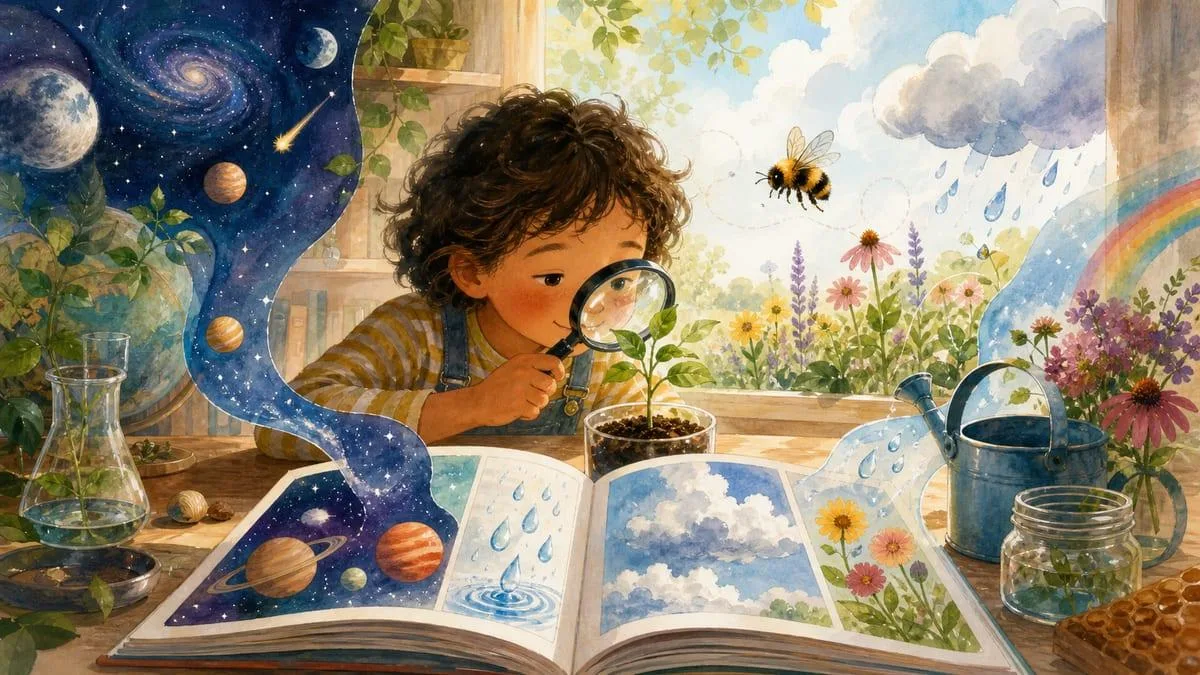
Children are natural scientists before they ever meet a science worksheet.
They drop food from a high chair and study gravity.
They ask why the moon follows the car.
They poke soil, collect rocks, watch ants, splash water, chase shadows, and ask questions at the exact moment you are trying to leave the house.
Science begins with noticing.
That is why STEM picture books can be so powerful for young children. They do not have to turn science into school. They can turn everyday wonder into language.
Why STEM belongs in picture books
The National Academies has emphasized that young children are capable of meaningful STEM learning when experiences are designed well. NSTA, the National Science Teaching Association, has long supported the use of children's books to guide inquiry in elementary science through resources like Picture-Perfect Science.
This makes sense. A picture book can do things a worksheet cannot.
It can slow a concept down.
It can give a molecule a voice.
It can make a planet feel like a character.
It can show the inside of a beehive.
It can turn weather into a pattern a child can recognize.
It can make a seed's patience visible.
For children ages 3-8, science is often easier to enter through story, image, rhythm, and conversation.
The best STEM books begin with questions
A strong STEM picture book does not only deliver facts. It makes children want to ask more.
Instead of only saying, "Bees pollinate flowers," it might make a child wonder, "How does a bee know where to go?"
Instead of only saying, "Earth is the third planet," it might make them ask, "Why is Earth different from Mars?"
Instead of only saying, "Water evaporates," it might make them notice steam from soup or clouds after rain.
That is the goal: science that follows the child off the page.
Space: big wonder for small readers
Space is one of the easiest STEM doors to open because children already understand awe.
They look up.
They see the moon.
They notice stars.
They ask if astronauts sleep.
They wonder whether Pluto is lonely.
NASA's current solar system resources explain that our solar system includes the Sun, eight planets, five officially named dwarf planets, moons, asteroids, and comets. That is a lot for a young child to hold. A picture book can make it friendly.
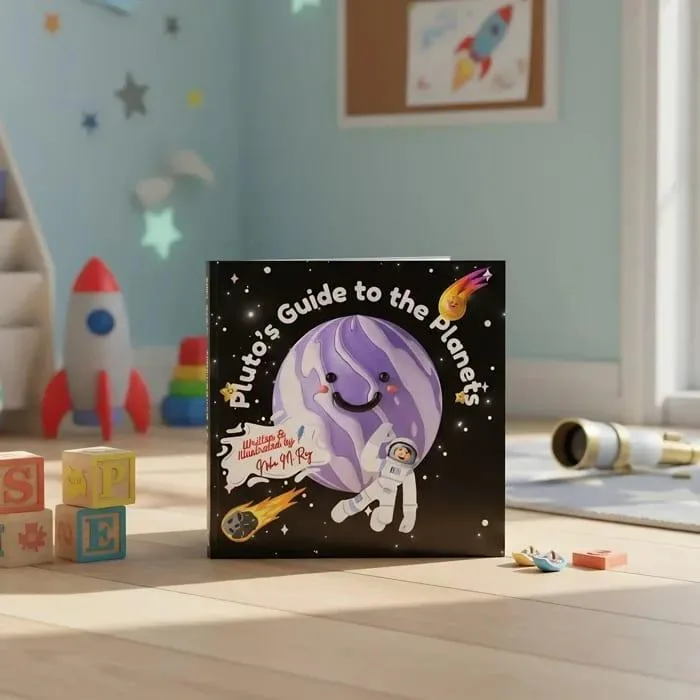
Pluto's Guide to the Planets does this by giving Pluto a voice. Instead of presenting space as a list, it invites children into a tour. They meet planets as neighbours. They learn facts, but they also feel personality and perspective.
For a child, that matters. Facts stick better when they are attached to delight.
Try asking after a space book:
"Which planet would you visit first?"
"What do you think Earth would say about us?"
"Why do you think Pluto still matters?"
"What would you pack for space?"
Plants: patience children can see
Plant books are wonderful because the science can continue in a cup, garden, balcony, or windowsill.
A seed is small. Then it changes. It needs light, water, time, and care. Children can observe this with their own eyes.
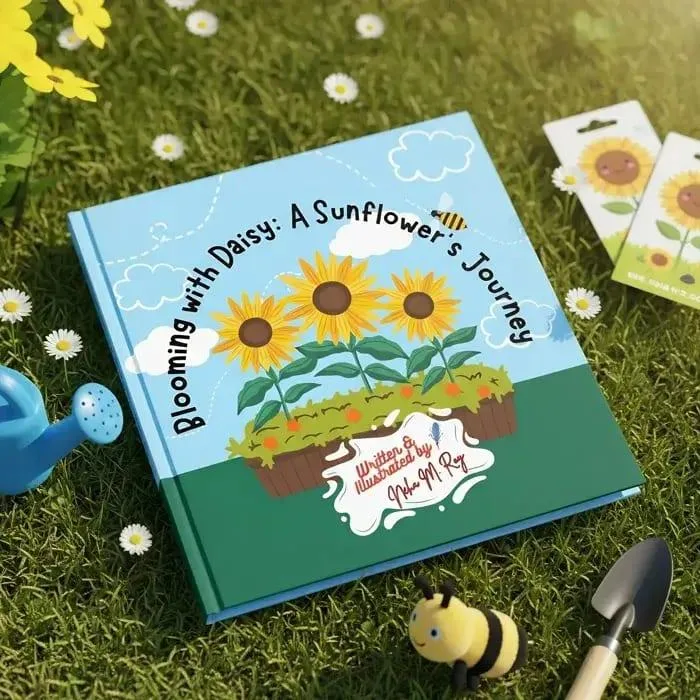
Blooming with Daisy: A Sunflower's Journey is the kind of plant life cycle story that can become an activity. Read it, plant a seed, draw what changes, measure the stem, notice the leaves.
The science lesson is not only "plants grow."
It is patience.
It is observation.
It is cause and effect.
It is care.
Ask:
"What changed first?"
"What does Daisy need?"
"What do you need when you are growing?"
That last question is where science and emotional learning quietly meet.
Water: the science hiding in every home
Water is everywhere in a child's life: bath, rain, tears, soup, puddles, ice, steam, rivers, clouds.
A book like Hi, I Am H2O! can help children see water not as ordinary background, but as something with structure and movement. For young readers, personifying a molecule can make an invisible idea feel graspable.
You can extend the book with simple questions:
"Where did you see water today?"
"What happens when water gets very cold?"
"Where do puddles go?"
"What does steam look like?"
You do not need a lab. You need attention.
Weather: the science children feel on their skin
Weather books work because children already have opinions about weather.
Rain changes playground plans. Wind steals hats. Thunder feels big. Sunshine changes mood. Clouds look like animals.
The Magical World of Weather can help children connect those daily experiences to patterns and vocabulary. Weather is not just something adults check on an app. It is something children can observe.
Try a weather window ritual:
Each morning, ask:
"What do you see?"
"What do you feel?"
"What do you think the sky is doing?"
"What should we wear?"
That is early science: observation, prediction, and evidence.
Bees: tiny creatures, enormous lessons
Bee books can teach biology, teamwork, communication, food systems, and environmental care.
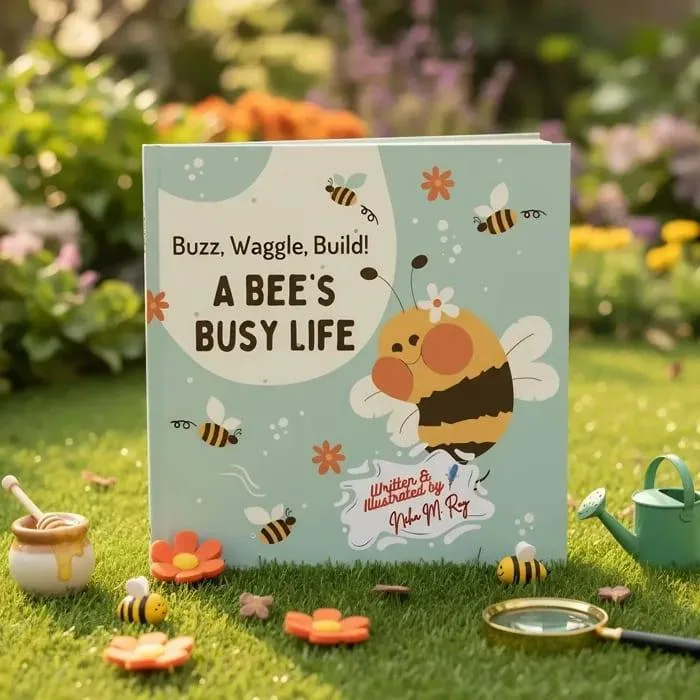
Buzz, Waggle, Build! A Bee's Busy Life introduces the hive as a busy community. Children can learn about pollination, nectar, honey, and the waggle dance, but they also see cooperation.
A bee book can lead to:
- watching flowers outdoors
- tasting honey
- drawing a hive
- planting pollinator-friendly flowers
- talking about why small creatures matter
That is the beauty of early STEM. It does not stay trapped in the book.
How to read STEM books aloud
Do not worry if you do not know every answer.
In fact, one of the best things a parent can say is:
"I don't know. Let's find out."
That sentence teaches children that curiosity is allowed to continue.
Use three kinds of questions:
Notice: "What do you see?"
Wonder: "Why do you think that happened?"
Connect: "Where have we seen this before?"
If a child asks a question that derails the story, follow it for a moment. That is often where the real learning is.
A STEM bookshelf for ages 3-8
A balanced STEM shelf might include:
- one space book
- one plant or garden book
- one animal or insect book
- one weather book
- one water book
- one building or engineering book
- one human body book
- one biography of a scientist or inventor
- one silly science book
The mix tells children: science is not one subject. It is a way of looking.
Final thought
The goal is not to raise a child who can recite facts on command.
The goal is to raise a child who keeps noticing.
A child who looks at the moon and asks.
A child who sees a bee and pauses.
A child who watches rain slide down a window and wonders where it goes.
A child who understands that the world is full of patterns, mysteries, systems, and stories.
That is what a good STEM picture book can do.
It can make the world feel readable.
Helpful sources:
NASA Kids Solar System: https://science.nasa.gov/kids/solar-system/
NASA About the Planets: https://science.nasa.gov/solar-system/planets/
NSTA Picture-Perfect Science: https://www.nsta.org/book-series/picture-perfect-science
National Academies early STEM learning report: https://nap.nationalacademies.org/resource/24677/EL%20Early%20STEM%20Learning.pdf