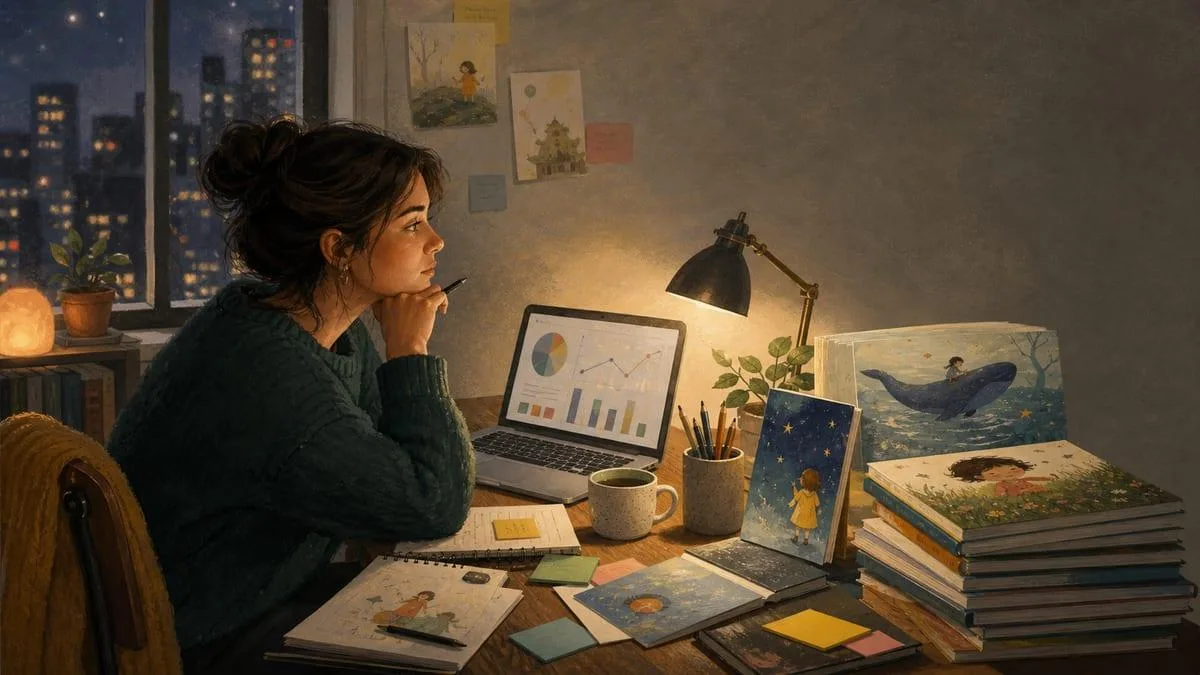
There is a moment many indie children's authors do not talk about enough.
The book is finally real.
The cover is done. The files are uploaded. The paperback exists. Maybe the author copy arrives in the mail and the whole family gathers around the box. Maybe there are tears. Maybe there is a photo with the book held close to the chest.
And then, very quietly, the next question arrives:
Now how does anyone find it?
That question can feel heavier than writing the book.
In author communities, especially among indie children's authors, the same pain comes up again and again. People are not only asking, "Is my story good?" They are asking, "How do I get it seen? How do I get reviews? How do I reach parents? Will bookstores take me seriously? Why did my post get 50 views when I worked so hard on it? How do I compete with big publishers, famous authors, and algorithms that seem to change every week?"
If you are an indie children's author feeling that, you are not being dramatic. You are running into a real discoverability problem.
Visibility is not the same as quality
A good book can be invisible.
That is one of the hardest lessons in publishing.
Parents are busy. Teachers are busy. Librarians are careful. Bookstores have limited shelf space. Online retailers are crowded. Social platforms reward content that keeps people scrolling, not necessarily the book that would help a child at bedtime tonight.
BookNet Canada has written about discoverability as part of the book supply chain, and the core idea is simple: a book has to be findable before it can be bought, borrowed, reviewed, recommended, or loved. That means metadata, categories, keywords, distribution, reviews, social proof, and human recommendations all matter.
For indie authors, that can feel unfair because most of us did not become children's authors because we wanted to become supply-chain specialists.
We came because we had a story.
Why children's books are especially hard to market
Children's books have a strange marketing problem: the reader is usually not the buyer.
A three-year-old may fall in love with a book, but a parent buys it. A teacher may use it, but a school budget approves it. A librarian may like it, but a collection policy guides the decision. A grandparent may gift it, but only if they understand what makes it special.
So a children's book has to speak in several directions at once.
It has to delight the child.
It has to reassure the adult.
It has to be easy to understand quickly.
It has to fit a need: bedtime, STEM, feelings, safety, family, confidence, humour, classroom use, gift giving.
That is why "buy my book" rarely works on its own. Parents do not wake up thinking, "I need to support an author today." They wake up thinking, "My child is scared of bedtime," or "My kid keeps asking about planets," or "I need a meaningful Father's Day gift," or "How do I explain body boundaries without frightening them?"
The author who can connect the book to the parent's real-life moment has a better chance of being seen.
Social media can help, but it is not a strategy by itself
Instagram, TikTok, Facebook, Pinterest, newsletters — all of them can help. But none of them should be the whole plan.
Instagram's own guidance on recommendations explains that posts may be shown to people who do not follow you in places like Reels, Explore, and Feed recommendations if they meet eligibility and ranking signals. That sounds hopeful, and it can be. But for authors, relying on the algorithm alone is emotionally exhausting.
A post can do well for no clear reason. A better post can disappear. Boosting a post can feel tempting, but paid reach without a clear offer, landing page, or audience can burn money quickly.
A healthier approach is to treat social media as one layer of discoverability, not the whole foundation.
Use it to:
- show the real problem your book helps with
- share read-aloud moments
- explain the theme in parent language
- offer free activity sheets or discussion questions
- collect emails
- build relationships with teachers, librarians, reviewers, and bookstores
- invite people into a longer story, not just a single sale
The visibility stack every indie children's author needs
Think of visibility as a stack, not a single tactic.
- Clear positioning
Can someone understand your book in one sentence? Not the plot — the need. "A gentle body safety book for ages 3-8." "A funny space book for kids who ask big questions." "A bedtime book for children who struggle to wind down."
- Strong metadata
Title, subtitle, categories, keywords, age range, description, and BISAC-style thinking matter. This is not glamorous, but it helps retailers, search engines, and human buyers place your book.
- A useful website page
Every book needs a home beyond Amazon: cover, description, age range, themes, formats, activities, reviews, and a clear buy link. If you speak to schools or libraries, include educator-friendly information.
- Review pathway
You need a gentle, ethical way to invite reviews without pressuring friends, family, or readers. Amazon, Goodreads, and FTC rules all matter here. A good review plan protects your reputation.
- Content pillars
Instead of posting random graphics, create repeatable pillars: parent problem, book theme, behind the scenes, child activity, author story, seasonal gift, educator use.
- Partnerships
Bookstores, schools, libraries, parenting creators, teacher accounts, therapists, speech-language pathologists, homeschoolers, and themed author collaborations can all become discovery points.
- Email list
Social platforms rent you attention. An email list gives you a relationship. Even a tiny list is powerful if the people on it actually care.
What parents can do to help indie children's books
If you are a parent reading this and you love a small children's book, you can change its future with small actions.
Leave an honest review.
Recommend it to another parent.
Ask your library if they can order it.
Ask your child's teacher if it fits a unit.
Share a photo of your child reading it, if you are comfortable.
Buy directly from the author at an event.
Gift it.
Comment on the author's post with a real sentence, not just a heart.
Small books travel through people.
What ChatterChirps is learning
At ChatterChirps, I think about this every day. I write children's books, but I also live inside the reality of getting them into the hands of families who need them.
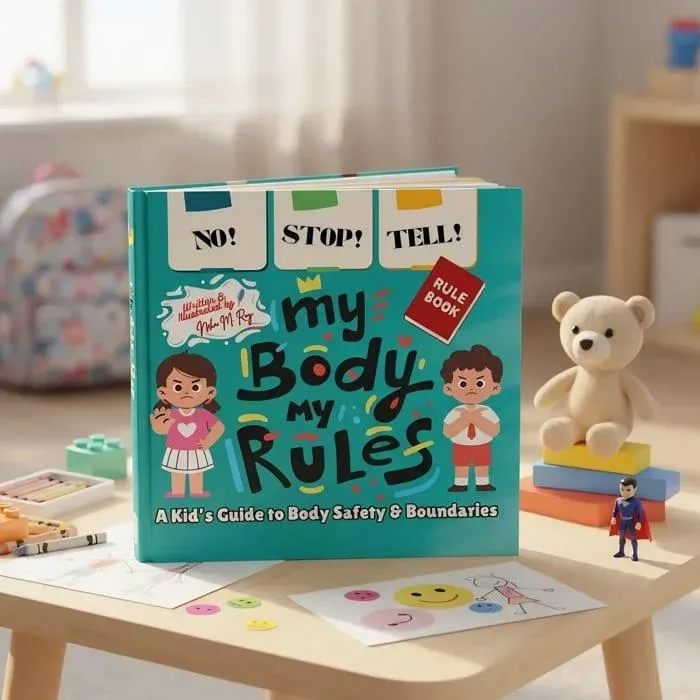
A body safety book like NO! STOP! TELL! My Body, My Rules! has to reach the parent who is nervous about starting that conversation.
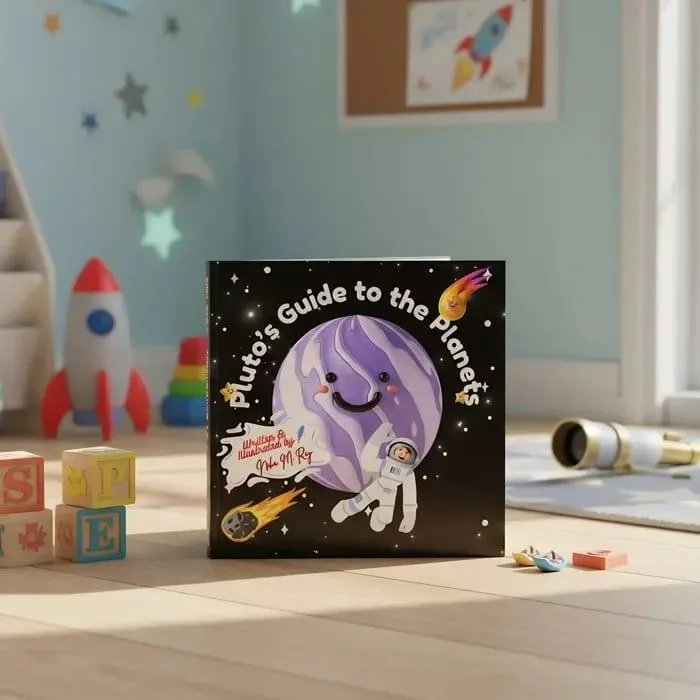
A STEM book like Pluto's Guide to the Planets, Hi, I Am H2O!, Blooming with Daisy, or The Magical World of Weather has to reach the child who thinks science is wonder, not worksheets.
A sports book like All the Sports I Can Play has to reach the child who has not yet seen movement as something they can belong to.
A bedtime book like Rest Easy: A Nighttime Journey has to reach the exhausted caregiver who needs the evening to soften.
A family book like She Is So Much More or How Dads Show Up has to reach the person looking for a gift that feels more personal than another toy.
That is the work after publishing.
Not shouting louder.
Making the right book easier to find at the right moment.
If you are a parent, teacher, librarian, or bookstore owner looking for children's books by theme, the ChatterChirps collection is built exactly that way: body safety, early STEM, big feelings, sports, bedtime, family love, nature, and imagination. You can browse the full collection at https://chatterchirps.com/stories/.
A final word for indie authors
If your book is not selling yet, it does not automatically mean the book is bad.
It may mean the path to the reader is unclear.
That can be fixed, slowly and honestly. One better description. One clearer page. One teacher connection. One review. One bookstore conversation. One useful blog post. One parent who says, "This is exactly what we needed."
Publishing the book is a brave beginning.
Visibility is the next craft.
Helpful sources:
BookNet Canada on discoverability and the supply chain: https://booknetcanada.atlassian.net/wiki/spaces/UserDocs/pages/61702314/Discoverability+and+The+Supply+Chain+for+small+start-ups+and+self-published+authors
Instagram recommendation eligibility: https://www.facebook.com/help/instagram/653964212890722
Written Word Media 2025 Indie Author Survey: https://www.writtenwordmedia.com/2025-indie-author-survey-results-insights-into-self-publishing-for-authors/