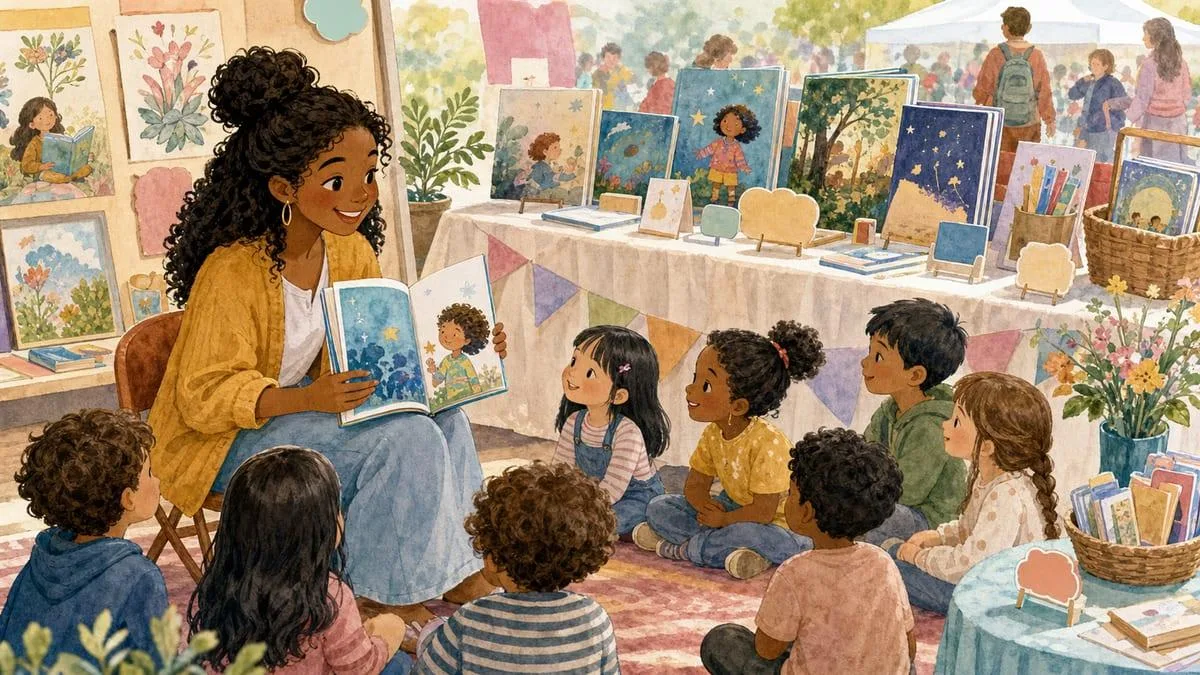
The first book event has a way of turning even a confident adult into a nervous child again.
You pack the books. You check the time. You wonder if anyone will come. You wonder if children will listen. You wonder if you brought too many copies, then immediately wonder if you brought too few.
If you are doing a children's book fair, school reading, library storytime, bookstore signing, or community market for the first time, take a breath.
The goal is not to look like a celebrity author.
The goal is to create one warm, memorable connection between a child and a book.
What a children's book event is really for
Yes, you may sell books.
But sales are not the only measure of success.
A good event can also give you:
- photos for future promotion
- parent conversations
- teacher contacts
- librarian relationships
- newsletter signups
- real-time feedback from children
- confidence reading your own work aloud
- language for future pitches
The American Library Association notes that author and illustrator visits can connect children and families with the magic of books and reading. Independent bookstores that run school visit programs often describe a typical visit as a talk, reading, Q&A, and signing. SCBWI events on school visits commonly focus on practical questions like how to book visits, what to charge, and how to keep children engaged.
That tells us something important: an author event is not just a table. It is an experience.
Before the event: prepare the simple things
Do not leave your event kit to the night before.
Here is a practical list:
Books in multiple formats if you have them
A tablecloth
Book stands
Price signs
QR code to buy online
QR code to your website or mailing list
Card reader or payment app
Small cash float if cash is common in your area
Bookmarks or postcards
A pen that actually works
Tape, clips, scissors
Water bottle
Snacks
A simple one-page author sheet
A small sign with your name and book themes
A mailing list signup sheet or QR code
A bag for purchases
A few conversation starters
For children's authors, add:
A read-aloud copy you do not mind handling roughly
A plush, prop, puppet, or visual object if it fits the book
A 5-minute activity idea
Colouring sheets or discussion cards
A teacher/librarian info sheet
You do not need an elaborate display. You need clarity.
People should be able to glance at your table and understand:
Who is this book for?
What is it about?
Why might my child enjoy it?
Your table should answer parent questions quickly
Parents rarely have time to read a full description while managing children.
Use small signs like:
"Ages 3-7"
"Body safety and boundaries"
"Gentle bedtime read"
"Space facts in rhyme"
"Great for classrooms"
"Perfect Father's Day gift"
"Includes discussion questions"
This is not dumbing down your book. It is helping a busy adult make a decision.
For ChatterChirps, for example, I might group books by parent need:
For curious kids: Pluto's Guide to the Planets, Hi, I Am H2O!, The Magical World of Weather
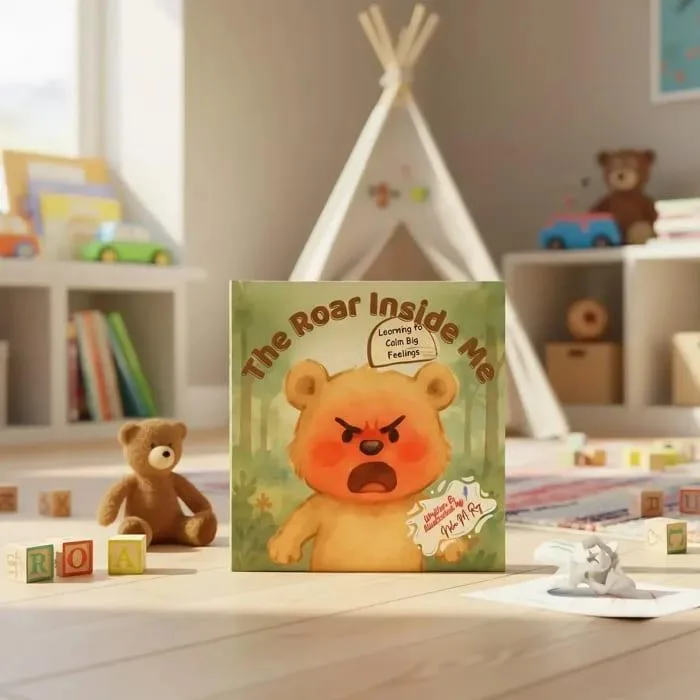
For big feelings: The Roar Inside Me, Rest Easy, Buzzy the Brave Bee
For safety conversations: NO! STOP! TELL! My Body, My Rules!
For gift moments: She Is So Much More, How Dads Show Up
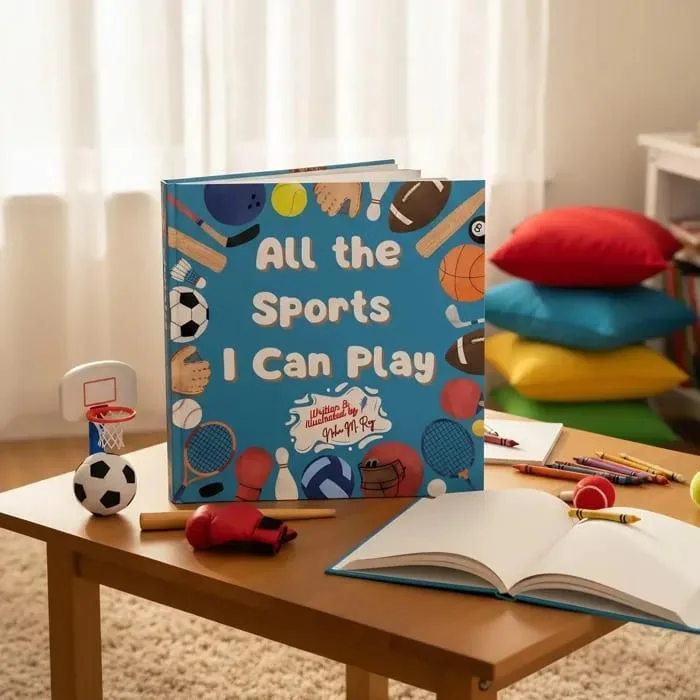
For active kids: All the Sports I Can Play
The parent who says, "My child loves space," should not have to hunt.
Reading aloud: be bigger than you feel
Children do not need a perfect performance. They need presence.
Read slower than feels natural.
Show the pictures longer than you think.
Use your face.
Ask small questions.
Let children answer.
Pause when they laugh.
Do not panic if one child wanders.
A simple read-aloud structure:
- Introduce yourself in one sentence.
- Tell them what to listen for.
- Read with energy.
- Ask two questions during the story.
- Ask one question at the end.
- Connect the story to their lives.
- Invite them to look at the book afterward.
For example:
"This book is about a little bee who feels nervous about flying farther than usual. While I read, see if you can spot the moment Buzzy starts to feel brave."
Now the children have a job.
The Q&A will surprise you
Children ask wonderful questions and chaotic questions.
You may get:
"How old are you?"
"Do you draw the pictures?"
"Are you rich?"
"Why did you make the bee yellow?"
"Do you know Dog Man?"
"Can I tell you about my cat?"
Answer warmly and briefly. If one child takes over, say, "I love that. Let's take one more question from someone who has not had a turn."
For school visits, prepare a few questions to ask them too:
"Who here has ever had an idea for a story?"
"What do you do when you feel stuck?"
"What makes a character interesting?"
"Where do you think authors get ideas?"
Children love being treated like thinkers.
Selling without feeling salesy
Many authors feel awkward selling after reading. Reframe it.
You are not pushing. You are making the next step easy.
Try:
"If this story would be helpful in your home or classroom, I have copies here today. You can also scan the QR code to find all ChatterChirps books online."
For schools, ask ahead about sales rules. Some schools allow order forms before or after the event. Some require a bookstore partner. Some do not allow sales at all. Bookstores that coordinate school visits often handle orders, delivery, and signing logistics, so it is worth learning the local process.
Follow-up matters
After the event, do not disappear.
Send a thank-you email.
Share photos if permitted.
Ask for a short testimonial.
Offer a free activity sheet.
Invite the organizer to your newsletter.
Ask what worked and what could be better.
If a teacher says the children loved the book, ask if you may quote them. If a librarian says the topic was useful, ask if they know another branch or school that might benefit.
One event can become three if you treat people well.
A final word for nervous authors
Your first event may not be polished.
You may forget tape. You may stumble over a sentence. You may sell fewer books than you hoped. You may come home exhausted.
But you will learn things no dashboard can teach you.
You will see which page children lean toward.
You will hear which sentence makes them laugh.
You will notice what parents ask.
You will understand your book differently after watching it meet real readers.
That is worth showing up for.
Helpful sources:
ALA Author Visits: https://www.ala.org/tools/atoz/authorvisits/authorvisits
SCBWI school visit programming: https://www.scbwi.org/events/demystifying-school-visits-from-start-to-finish
Quail Ridge Books author visit overview: https://quailridgebooks.com/author-visits
Blue Willow Bookshop school visits: https://bluewillowbookshop.com/school-visits