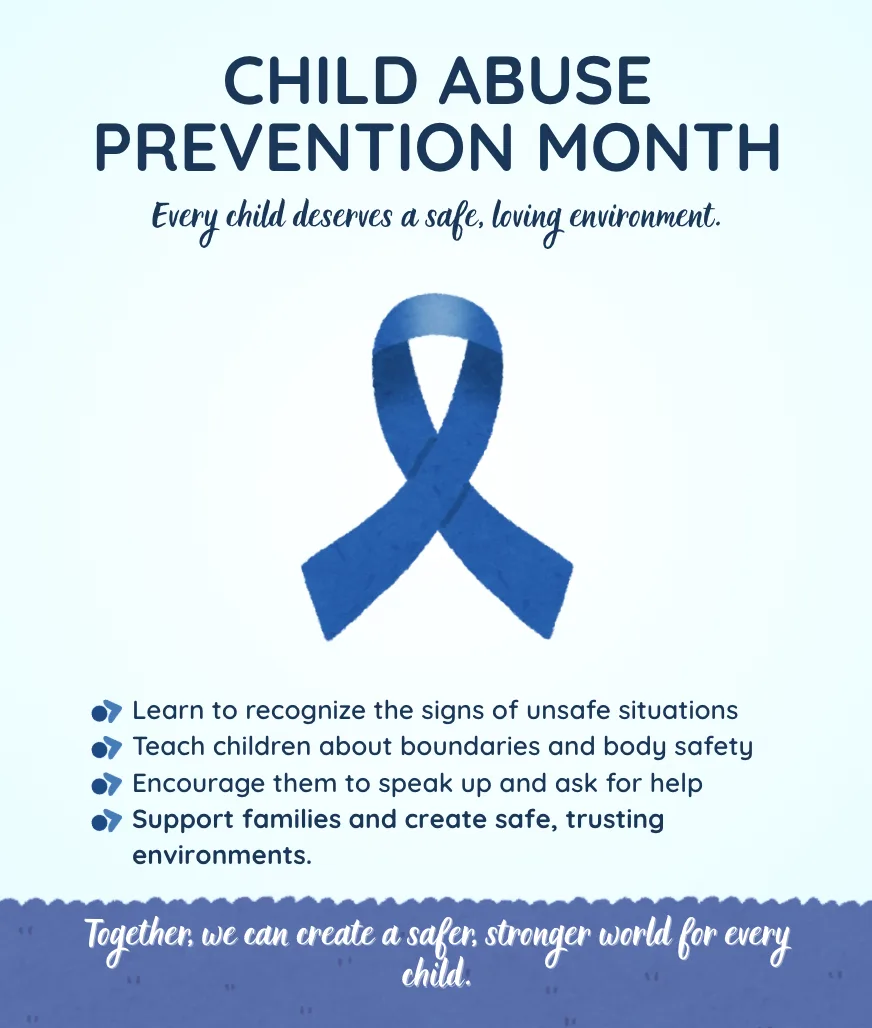
By Neha Moghe Roy | ChatterChirps | Child Abuse Prevention Month
Every April, the world turns pinwheels blue and gold in parks, schools, and front yards — a quiet, powerful symbol of the childhoods we are all committed to protecting.
But here's the truth no pinwheel can speak for us: protection begins at home, with a conversation.
As a children's book author and a mother who has spent years thinking deeply about what kids need to feel safe in their own bodies, I believe the most powerful thing a parent can do is not build higher walls — it's give their child a louder, clearer voice.
This April, in honor of Child Abuse Prevention Month, I want to talk about something that makes many parents uncomfortable: teaching young children about body safety, boundaries, and the courage to say no.
Why April Matters — And Why Most of Us Stay Silent
Child abuse is one of the most underreported crises affecting children today. According to the CDC, approximately 1 in 4 girls and 1 in 13 boys experience sexual abuse at some point in childhood. Even more sobering? In the majority of cases, the perpetrator is someone the child knows and trusts.
And yet, most children enter the world without ever being taught the most fundamental truth: their body belongs to them.
We teach kids to look both ways before crossing the street. We teach them not to talk to strangers. But many of us stop short of the conversations that matter most — the ones about body autonomy, private parts, uncomfortable touches, and what to do when something doesn't feel right.
Why? Because we don't know where to start. Because we're afraid of scaring them. Because childhood feels too precious to touch with hard truths.
I understand that. But I also know this: the discomfort of that conversation is nothing compared to what happens in its absence.
What Body Safety Education Actually Looks Like
Here's what most parents get wrong — body safety education doesn't have to be a heavy, one-time talk delivered with a tight chest and a shaky voice.
It can be light, consistent, and woven into everyday moments.
It starts with language. Teaching children the correct names for their body parts removes the secrecy and shame that abusers rely on. It continues with simple, age-appropriate rules:
- Your body belongs to you. No one has the right to touch you in a way that makes you feel unsafe or uncomfortable.
- Private parts are private. The parts covered by your swimsuit are yours alone.
- You have the right to say NO — even to adults, even to people you love, even if it feels rude.
- Secrets about bodies are never okay to keep. Safe surprises (like birthday presents) are different from unsafe secrets.
- If something happens, it is NEVER your fault. And you can always tell a trusted adult.
These aren't scary ideas. They're empowering ones. And children as young as two and three can begin to absorb them — especially when they're delivered through story.
Why Stories Are the Safest Place to Start
Children don't process safety rules the way adults do. They process through characters, through emotion, through narrative. A child who has heard a story about a little one learning to say no to an uncomfortable touch will carry that story in their body long after the book is closed.
That's exactly why I wrote NO! STOP! TELL! — My Body, My Rules!
This book was born from a single conviction: every child deserves to know, in words they can understand, that they have power over their own body. That three simple words — NO. STOP. TELL. — can be their armor.
Through relatable characters and gentle, age-appropriate storytelling, the book helps young children (ages 3–8) learn:
- What a safe touch vs. an unsafe touch feels like
- That they are allowed to say no — even to grown-ups
- That telling a trusted adult is brave, not wrong
- That their body is their own, and that is a rule that never changes
And because body safety education should reach every child, regardless of where they come from, NO! STOP! TELL! is available in three languages — English, German, and Spanish — so more families can have this conversation in the language closest to their heart.
Parents and educators have told me that reading this book opened conversations they didn't know how to start. That their children came to them days later, unprompted, to say "Mama, remember the rule? NO, STOP, TELL!"
That's the moment protection becomes real. Not a pamphlet. Not a rule posted on a wall. A story that lives inside a child.
5 Ways to Start the Body Safety Conversation Today
You don't have to wait for the "right moment." Here's how to begin — gently, naturally, and right now:
1. Use bath time. It's a natural, low-pressure moment to name body parts correctly and establish the rule: "These are your private parts. No one touches these except you, your doctor (with Mom or Dad present), or to keep you clean and healthy."
2. Read together. Books like NO! STOP! TELL! do the heavy lifting for you. Read once, then ask: "What would you do if someone made you feel uncomfortable?"
3. Practice saying NO. Make it playful. Tickling is a great, low-stakes way to practice: "You can always say stop, and I will always stop. Always." Then follow through.
4. Normalize the conversation. Don't treat body safety as a one-time event. Revisit it the way you revisit road safety — often, simply, and without drama.
5. Make sure they know who their trusted adults are. Ask your child: "If something made you feel scared or uncomfortable, who would you tell?" Make sure they have at least three names.
A Note to Parents: You Are the First Line of Defense
Child abuse thrives in silence, secrecy, and shame. You are the antidote to all three.
You don't need to be a therapist or a child safety expert to have these conversations. You just need to start them — imperfectly, stumblingly, with love — and keep having them.
Every time you read a body safety book with your child, you are doing prevention work. Every time you validate your child's "no," you are building their voice. Every time you make it clear that no secret is too scary to share with you, you are building a fortress that follows them wherever they go.
This April, I invite you to start the conversation. Read a book. Ask a question. Say the words out loud: "Your body belongs to you."
It might be the most important sentence your child ever hears.
📚 Build Your Body Safety Bookshelf
No single book can do everything — and honestly, the more your child hears these messages from different voices, characters, and stories, the more they stick. Here are a few books I recommend pairing with NO! STOP! TELL! to build a well-rounded body safety library at home or in your classroom.
🌟 NO! STOP! TELL! — My Body, My Rules! by Neha Moghe Roy (That's mine — and yes, I'm proud of it) -
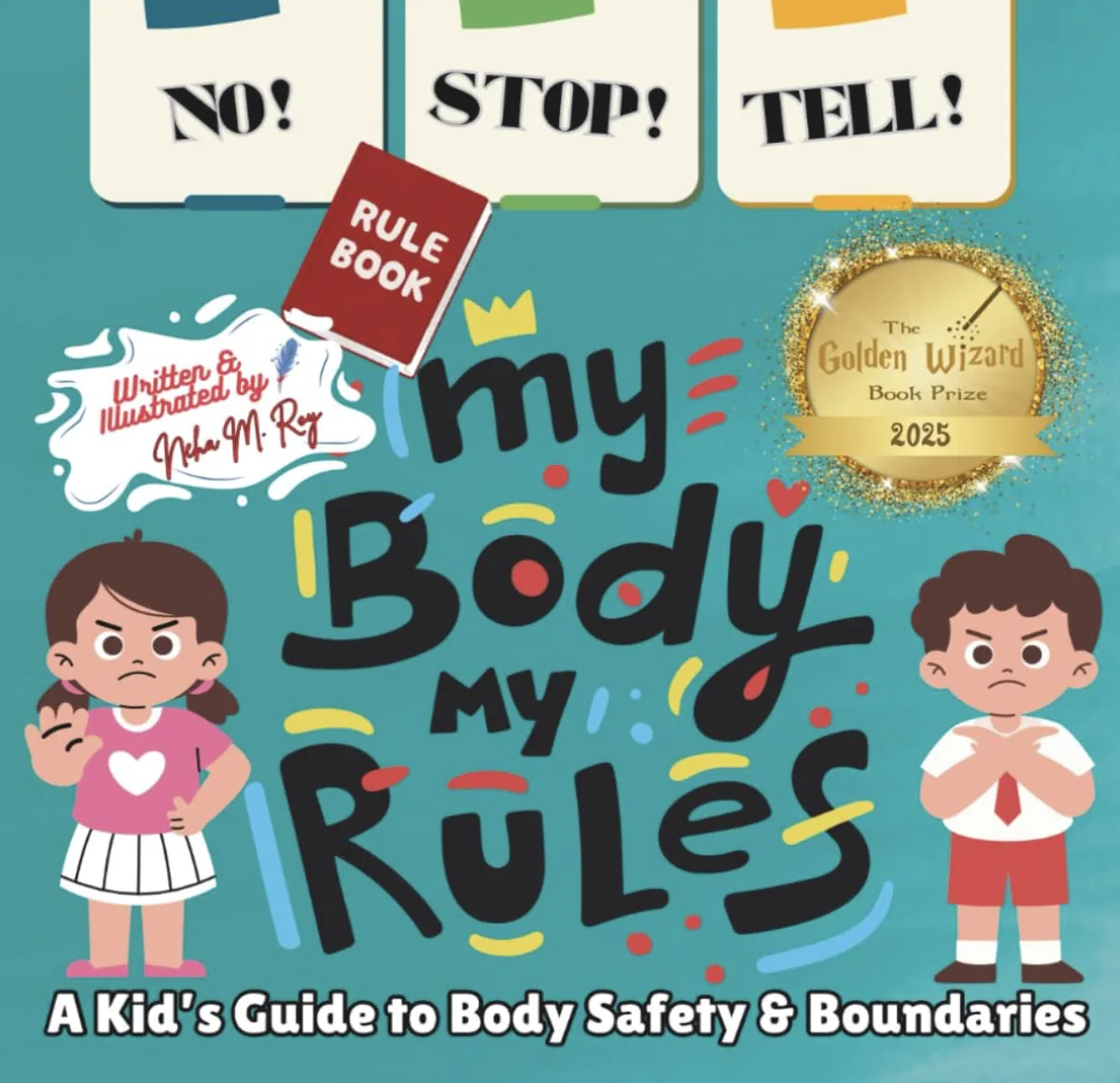
The foundational body safety book for ages 3–8. It teaches in a simple, age-appropriate way, helping children understand boundaries, safe and unsafe touch, and the importance of speaking up. With three powerful words that could change everything — NO. STOP. TELL. — it gives kids practical language they can use in real situations. A reassuring resource for parents starting early conversations around safety and trust. Available in English, German, and Spanish.
💛 Got Your Back, Always by Jessica Ann Ellis
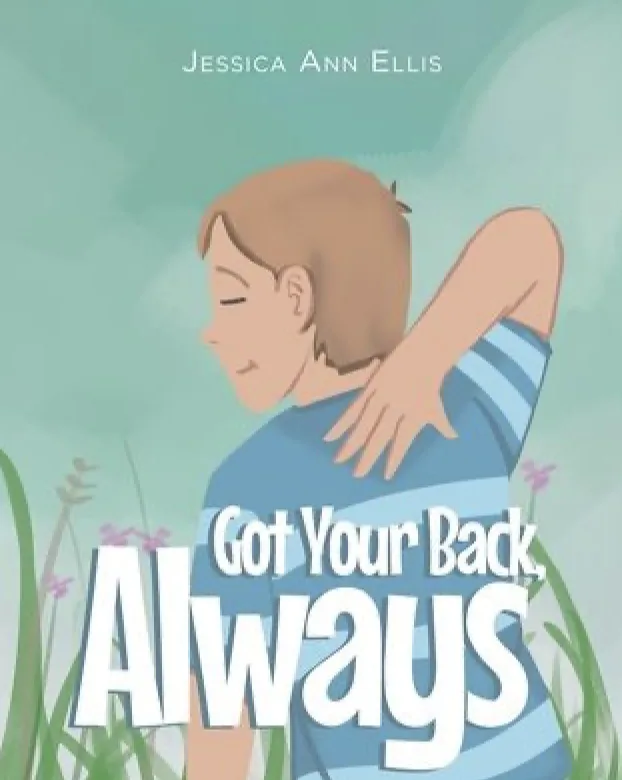
Before a child can tell a trusted adult about something scary, they need to believe that adult will show up for them. This beautiful book — written by a licensed elementary school teacher — is exactly that reassurance. A mother tells her child: no matter what you face, I've got your back. Ages 2–10. It's the emotional foundation that makes the body safety conversation possible. Find it on Amazon →
🛡️ No Means No! by Jayneen Sanders
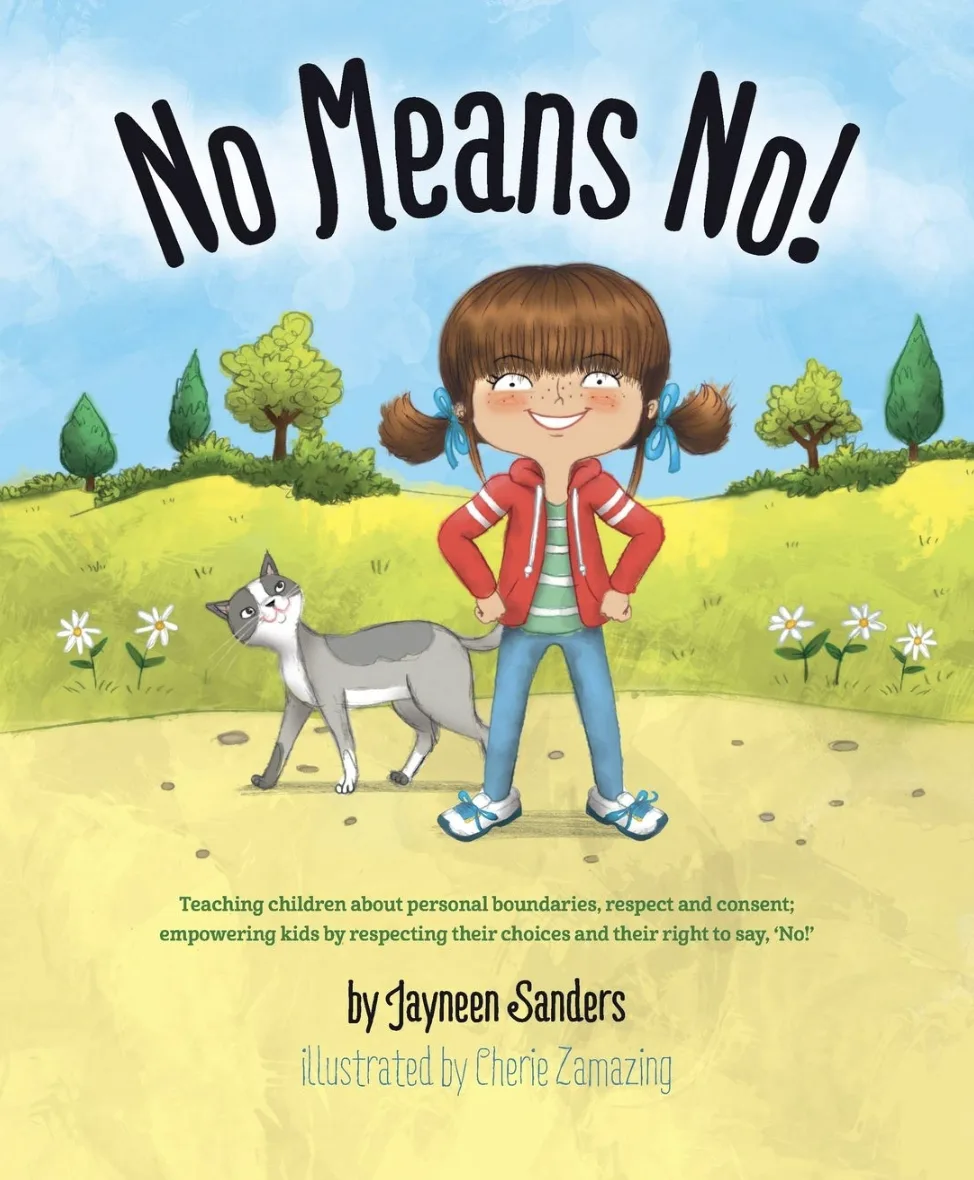
A widely used classroom favorite. Follows a young girl with a strong, clear voice about her body and her boundaries. Straightforward, age-appropriate, and empowering. Ages 3–9.
✋ My Body! What I Say Goes! by Jayneen Sanders
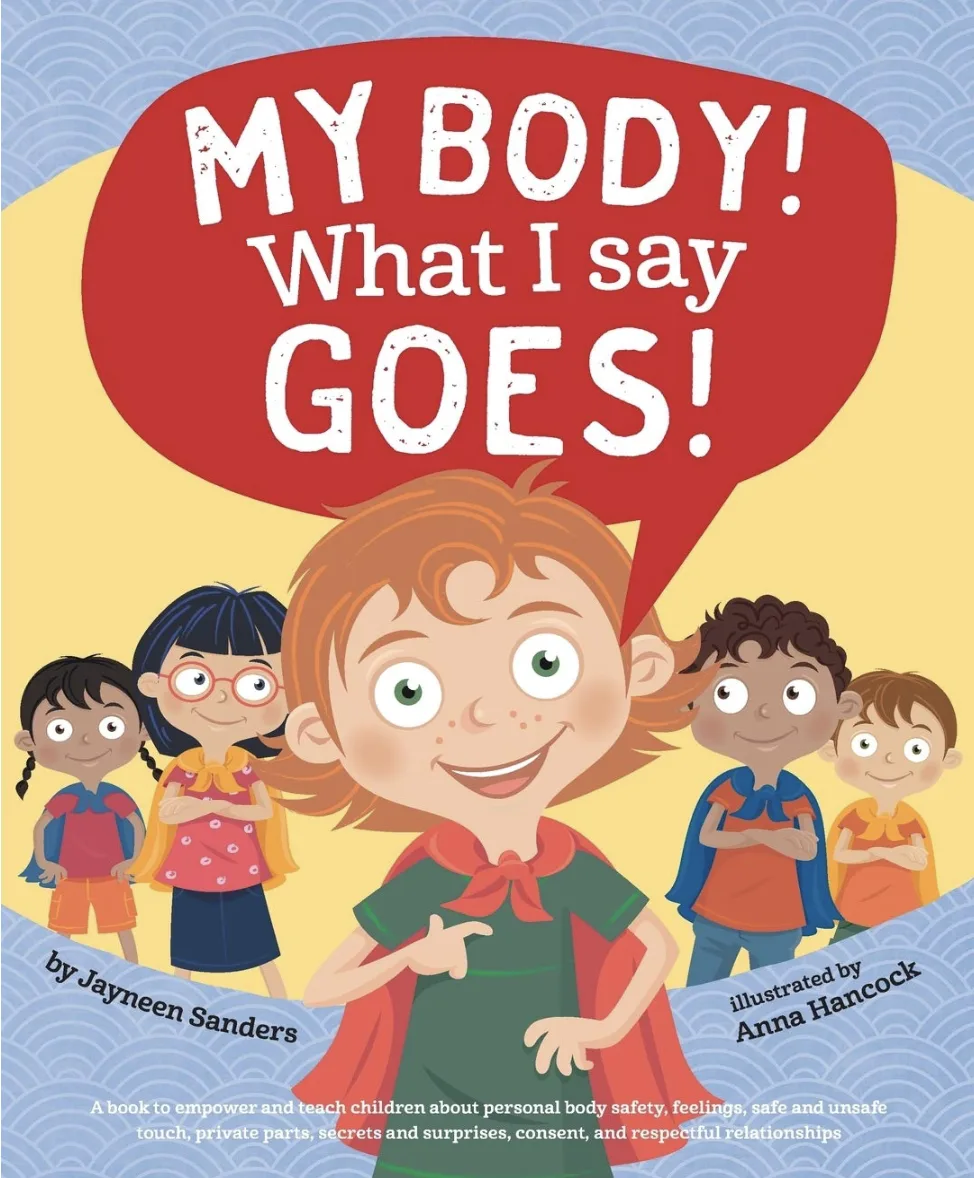
A companion book that reinforces body autonomy with warmth and clarity — great for kids who need to hear the message more than once (spoiler: that's all of them). Includes a helpful note for parents and educators at the back. Ages 3–9.
A well-stocked body safety shelf isn't about fear. It's about giving your child a language, a framework, and the unshakeable knowledge that their body is their own.
🎁 Free Resource: Child Safety Awareness Kit (Ages 3–8)
Before you even pick up the book, I want to give you something.
I've put together a free Child Safety Awareness Kit designed for parents and teachers of children ages 3–8. It's practical, printable, and ready to use — because every family deserves a starting point that doesn't cost a thing.
📖 Ready to Go Deeper?
NO! STOP! TELL! — My Body, My Rules! A Kid's Guide to Body Safety & Boundaries by Neha Moghe Roy is available now on Amazon — in English, German, and Spanish.
Trusted by parents and educators, and written with love for every child who deserves to feel safe in their own skin.
Neha Moghe Roy is an award-winning children's book author and the founder of ChatterChirps, a brand dedicated to books that help young children navigate big feelings, real-world safety, and the world around them. Her books are designed for ages 0–8 and are found in homes, classrooms, libraries, and daycares around the world.
Follow along on Instagram for parenting tips, read-aloud ideas, and behind-the-scenes from the ChatterChirps world.